

Advanced Driver Assistance Systems (ADAS) play an important role in keeping drivers and passengers safe on the road. Like any part of your vehicle, it needs regular maintenance, especially if you’ve recently had the windshield replaced.
There are two main approaches to calibrating Advanced Driver Assistance Systems (ADAS): static and dynamic. Accurate sensor calibration is essential to ensure safety and performance, but knowing which method applies to a particular vehicle can be tricky.
In this article, we’ll cover everything you need to know about ADAS calibration, including what is the difference between static and dynamic ADAS calibration, why understanding the difference is essential for driver safety, and what factors determine which calibration method is right for your vehicle after repairs or windshield replacement.
What Is ADAS Calibration and Why It Matters
ADAS calibration is the process of making sure your vehicle’s cameras and sensors are properly aligned so that all safety features function correctly. Some of the most common ADAS features that rely on precise calibration include:
- Adaptive Cruise Control (ACC): Automatically adjusts your speed to maintain a safe distance from the vehicle ahead, helping reduce fatigue during long drives and prevent rear-end collisions.
- Collision Avoidance System: Monitors traffic conditions and warns the driver of potential obstacles or crashes. Some systems can even reduce engine power or apply the brakes to minimize impact.
- Autonomous Emergency Braking (AEB): Detects sudden stops or obstacles and automatically engages the brakes when the driver doesn’t react quickly enough.
- Blind-Spot Monitoring: Uses sensors along the sides and rear of the vehicle to detect cars in adjacent lanes. When something enters your blind spot, it triggers a warning light, sound, or gentle vibration.
- Adaptive Headlights: Adjusts the direction of your headlights as you turn, improving visibility on curves or winding roads.
- Adaptive Light Control (ALC): Continuously optimizes headlamp brightness and range for night driving, ensuring better visibility without blinding oncoming traffic.
What Is The Difference Between Static And Dynamic ADAS Calibration?
Understanding the difference between static and dynamic ADAS calibration is essential to ensure your vehicle’s safety systems work as intended. Both methods aim to align the cameras and sensors that power features like lane-keeping assist and adaptive cruise control, but the process for each is quite different.
What is Static Calibration?
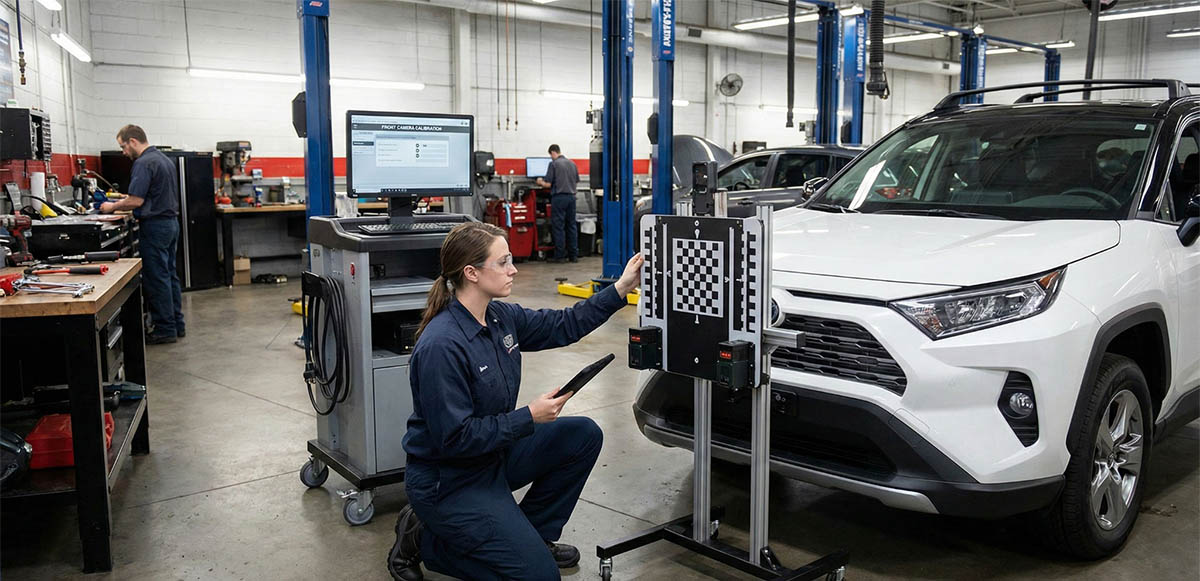
Static calibration, as the name suggests, involves aligning a vehicle’s cameras and sensors while it remains completely still. The process takes place indoors, where technicians use target boards, laser measurement tools, and diagnostic software to fine-tune accuracy. Because the setting is carefully controlled, with stable lighting and measured distances, they can achieve a very high level of accuracy.
This type of calibration is commonly required by manufacturers after windshield replacement or camera removal. When done correctly, static calibration ensures that your ADAS features, such as forward collision alerts and lane-keeping assist, operate within precise safety tolerances.
What is Dynamic Calibration?
In contrast with static calibration, dynamic calibration takes place on the road rather than in a workshop. While driving, technicians connect a diagnostic tool to your vehicle that helps the sensors adjust and confirm their accuracy in real-time. The process usually requires specific speeds and clear road markings so the system can detect patterns and distances correctly.
This kind of calibration is ideal for systems that rely on motion and environmental feedback, such as adaptive cruise control and lane-keeping assistance. It ensures your safety features are tuned precisely to real driving conditions.
When Do You Need ADAS Calibration?
ADAS calibration is not a one-time process. It must be done whenever the cameras or sensors on your vehicle are shifted, replaced, or misaligned. Because these components are highly sensitive, even the slightest misalignment can affect how they detect objects and distances. ADAS camera calibration is usually required after:
- Vehicle collisions: Even minor accidents can misalign sensors or cameras, making recalibration necessary to restore system accuracy.
- Suspension or wheel alignment work: Changes in vehicle height or alignment can alter the angle of the sensors, affecting how ADAS features interpret distance and movement.
- Sensor or camera replacement: Any time a camera, radar, or lidar sensor is replaced or removed, it must be recalibrated before the vehicle is driven again.
- Software updates or system errors: After certain software resets or updates, calibration may be required to re-synchronize the ADAS system.
- Windshield replacement: The front-facing camera mounted on the windshield must be recalibrated whenever new glass is installed. If you’re unsure why this step is necessary, learn more about windshield calibration after replacement and how it affects your vehicle’s safety systems.
Why Proper ADAS Calibration Is Critical for Safety and Insurance
Having your ADAS properly calibrated is about more than keeping your dashboard lights off—it’s about keeping you safe. If the sensors or cameras are even a little out of place, your vehicle may not detect obstacles or lane markings accurately. Features like lane departure alerts and automatic braking depend on precise data to work the way they’re meant to, and small errors can lead to big risks.
In addition to safety issues, improper ADAS calibration can lead to problems with your insurance or warranty.
In Ontario, most insurance companies require documentation that the system was recalibrated after repairs or windshield replacement. Skipping this step or failing to keep records can cause problems if you ever need to file a claim. Having your calibration completed by certified technicians protects not only your safety but also your eligibility for warranty and insurance coverage.
Key Takeaways
Your vehicle’s ADAS system is designed to keep you safe, but it can only do its job when it’s calibrated correctly. Both static and dynamic calibration help restore accuracy to your sensors, giving you reliable support every time you drive. Even a small misalignment can make a big difference, which is why professional calibration is so important after any windshield replacement or repair.For expert windshield repair and replacement services, trust Richmond Hill Auto Glass. Our technicians use industry-leading tools and calibration technology to ensure your vehicle’s safety systems perform exactly as the manufacturer intended. Fill out our online form to get a quote.